in any way, what happened to me a year ago is worth celebrating, no matter what kind of celebration it may be.
and my! it’s been a year 🙂
http://nauval.blogspot.com/2005/12/losing-few-gaining-many.html

in any way, what happened to me a year ago is worth celebrating, no matter what kind of celebration it may be.
and my! it’s been a year 🙂
http://nauval.blogspot.com/2005/12/losing-few-gaining-many.html
the reason why the blog has been deserted for centuries.
the reason why my writing skill has, somehow, been shifted to another kind.
the reason why my life has been turning upside down.

but at least, this is what matters for now.
and if you think that the most interesting part stops at the title above, you’re right. stop looking at the entry below. i mean it.
oh well. i should’ve known that you’re easily tempted.
ok, here goes:
Four jobs I’ve had:
1. A clown.
2. A waiter.
3. A tour-guide.
4. A salesman.
Four movies I could watch over and over:
1. Same Time, Next Year.
2. Before Sunset.
3. 84 Charing Cross Road.
4. His Girl Friday.
5. Radio Days.
6. Music Box.
7. Kejarlah Daku Kau Kutangkap.
8. Hiroshima, Mon Armour.
9. Scenes From A Marriage.
(i’m sorry, i can’t resist.)
Four places I have lived in:
1. Malang.
2. Solo.
3. Singapore.
4. Jakarta.
Four TV shows I love or loved:
1. Inside The Actor’s Studio.
2. Asari-Chan.
3. Losmen.
4. Lenong Rumpi.
Four places I have been on vacation:
1. Bangkok.
2. Bali.
3. Bandung.
4. Bandar Seri Begawan.(don’t laugh. ok, you may now.)
Four favorite dishes:
1. Rujak Cingur. (any souls out there care to translate?)
2. Nasi Pecel. (gosh, this is getting difficult!)
3. Gado-gado. (look, “mixed vegetables” won’t do any justice!)
4. Chicken Satay. (finally! whew!)
Four websites I visit daily :
1. This.
2. That.
3. My Holy Grail.
4. My Precious.
Four places I would rather be right now:
1. Holland V..
2. Fong Seng.
3. Spize.
4. Esplanade Library.
Four bloggers I’m tagging:
1. Dody. (he responds.)
2. Avin. (he replies.)
3. Ite’. (she’s a wannabe.)
4. Anoe. (she’s a waitress.)
Well, technically she was, but psychologically, she is. Sort of.
And I thank this beautiful blog … ger for such an inspiring relief to my heavily sedated mental state at the time of posting.
Oh, I see two elephants now.
Around two years ago, back in my comfort zone, I often took a walk on Sunday mornings with my then housemate, Acay. Much to his disagreement that we should jog instead of walk, (in addition to waking up at 6 am on Sunday mornings!), we could not deny that those walks proved to be something of an escape from our daily routines spent at our workplaces, surrounded by static cubicles and robotic tones of behaviors.

It was a perfect escape as we chose the right path to walk. And I don’t bother to put the words “most of the time”, because as far as I can recall, we always walk on the perfect tracks.
Those tracks belong to green grass of open fields lying right in front of us, amidst the breezy winds as whispered by old trees of Portsdown area. Often, there may not be gigantic branches of leaves, but large houses with impossibly spacious yards, where we see ourselves rolling while giggling, recalling the long-gone joyous childhood. Or maybe there were only small houses, and not flats, but they have sunflowers arranged to the nines, and kids across neighborhoods calling and shouting in jovial moods to each other.

Yes, the scenery of natural beauty unlikely found in a country often known for its tedious and boring skyscrapers. A perfect escapade on weekly basis within walking distances. And by now, the vivid greatness has become one perfect memory.
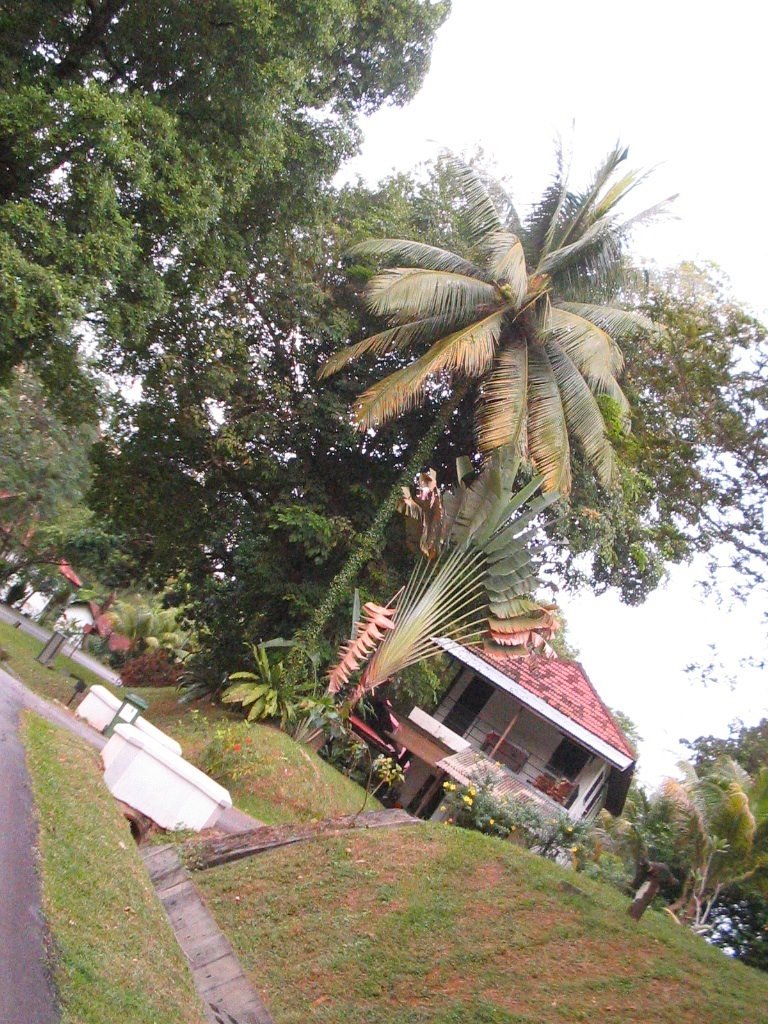
As I decided to bid a temporary goodbye to my comfort zone, and settling in my supposedly-home-country, I have never realized the great impact of the memory. As much as I dismiss the zone, I couldn’t help recalling the fresh air we breathe there, or even barking dogs surrounding me, prompting me to always take cautious moves whenever I see these inhumanely-proclaimed men’s-best-friends. Until now.
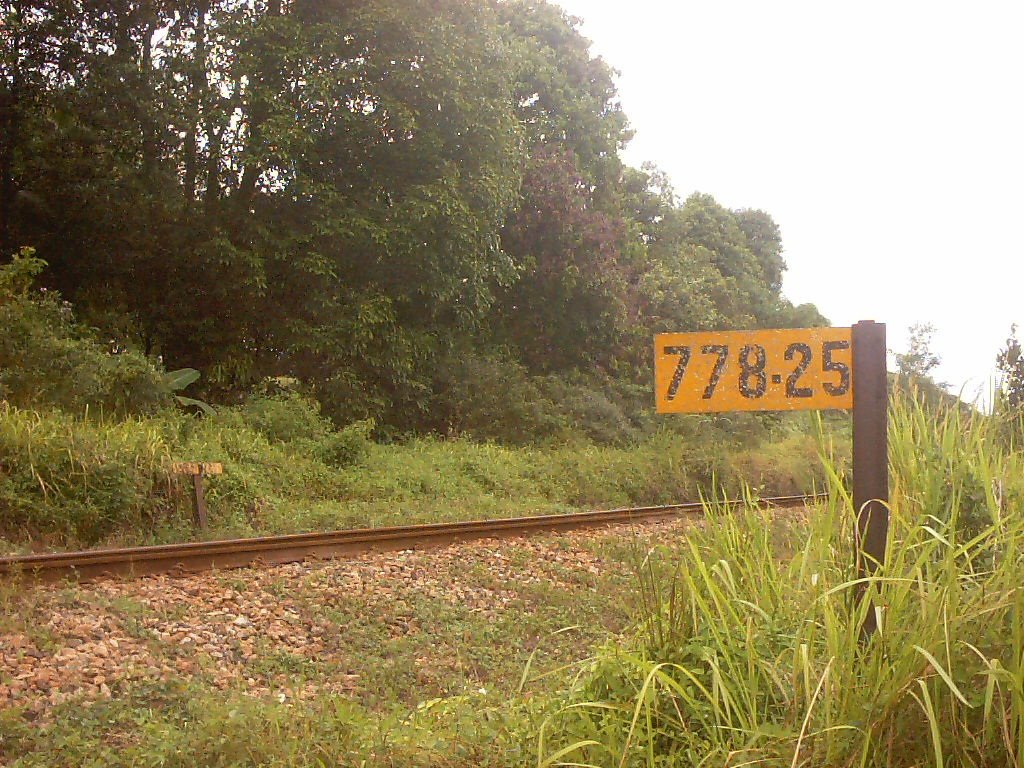
And just now, those memories evoked me again, with a different backdrop.
Here I am, in this chaotic city, staying in a walk-up flat right in the heart of the city. What started as simply trying to buy today’s paper, I found myself walking towards a street filled with shops, eating places, traffic jams, bakeries selling breads with jams, video rentals, and air pollution. Yet, I kept walking, and as I looked above, there it was. A few dried branches waiting for rains to drop by.
Hardly any green leaves, hardly any friendly people apart from aggressive drivers, hardly any grass apart from asphalt.
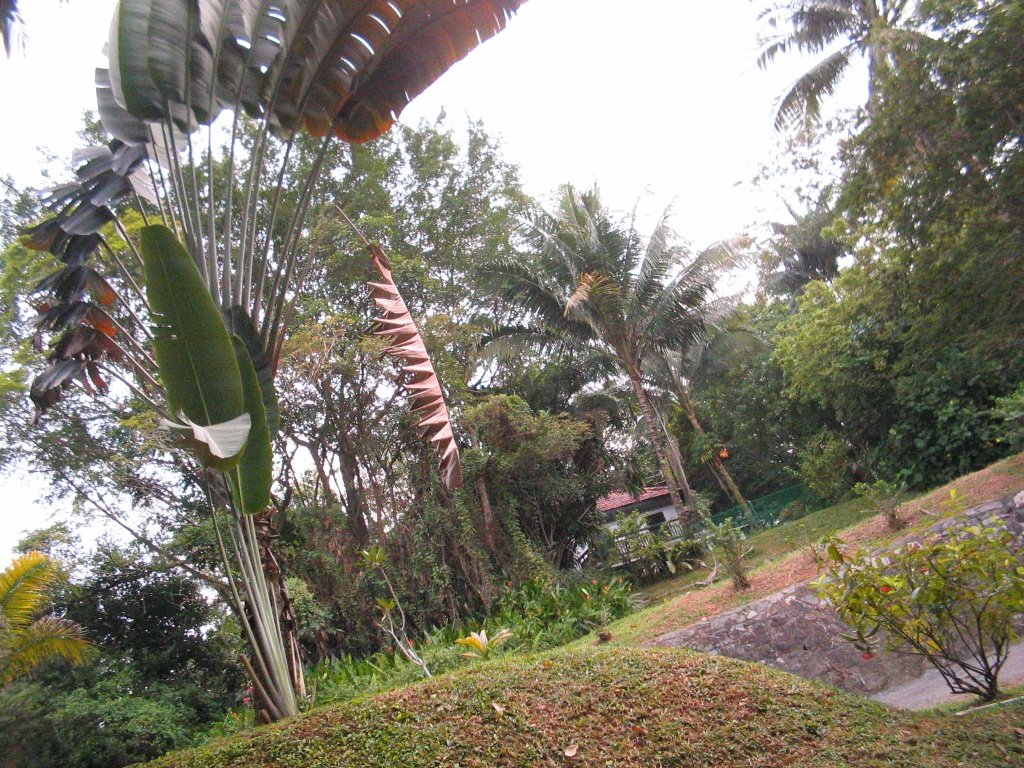
But I’m sure I’ll miss what I’m having now in near future, as much I miss those walks two years ago. When I part with these densed atmosphere, I will long for, miss, and eventually, cherish the moments.
The assurance is, the memory lingers on. I keep on walking.
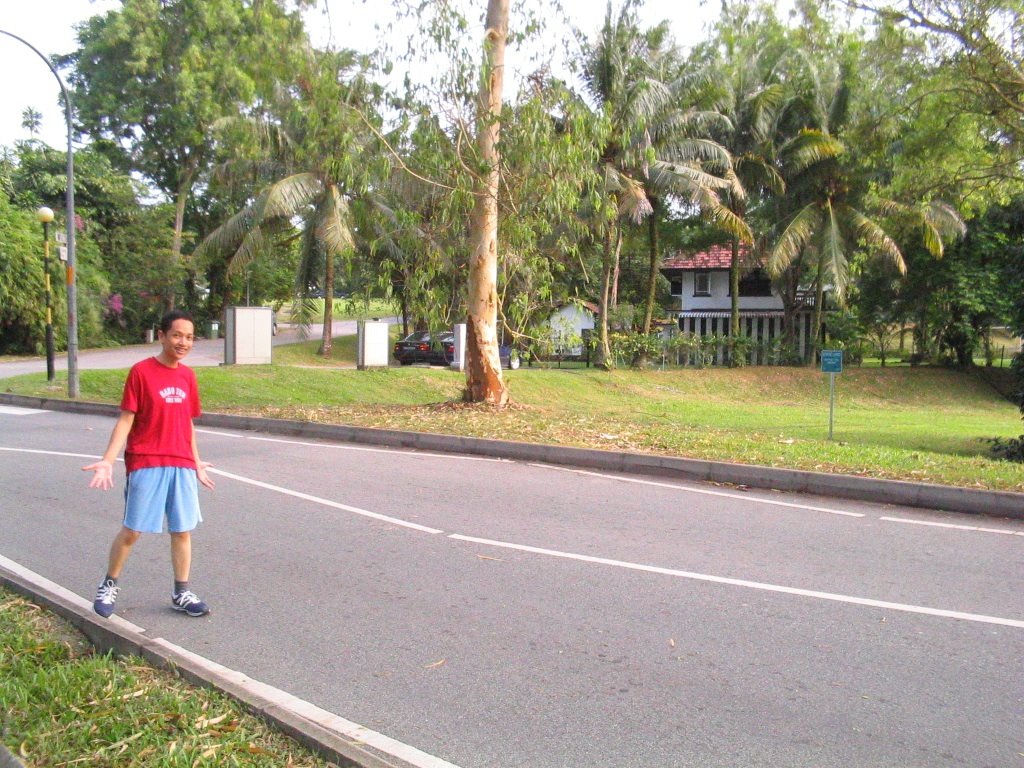
ps: the images were taken during actual jogs … eerr … walks (according to Cay, again! hahahaha!) on those lushful areas.
In case any of us has been zoned out or transported to another planet for the past century or two, here’s the latest development from the planet earth:
The cities we live in have somewhat become dangerously some cynical places to breathe in.
In case any of us has not been out of our homes in the past few weeks, this is a good time to start enjoying the fresh outdoor air filled with carbon-monoxide-what-have-you. But now, the enjoyment comes with a price.
As I decided to spend the beginning of the week in my other home in a suburban area, I couldn’t help but holding on to my bag tight, and spare the rest of my fingers to “cover” my pocket. Of course, once in a while, I let some of the fingers go to check other “areas”, to make sure that no strangers would dare to grab, touch or even look at. After all, I’m in a public transportation, not a public bathhouse. Well, not even the latter place exists here.
The protection does not stop there. During the journey, one can only wish to have another set of eyes at the back of the head, to make sure that no pickpockets around. Even when they are actually not around (God knows why they’re not working today), we can’t help shaking off the thought that they might be around at any given time.
Thus, when the journey was about to end, when an automated saying of “Thank you” was uttered while we gave out coins and scrampled notes, who wouldn’t freeze to stop when a becak driver said:
“Allow me to excuse myself, bang.”?
There, the moment of awkwardness, which soon only followed with a hesitant look and reply shown with a half-hearted nod. Worse, soon we checked our bags, wallets, purses, phones, to make sure everything is still intact. Everything’s perfectly in place, and he is giving his perfect smile. A very sincere smile.

We smile back for sure, but is it also sincere? Maybe we smirk, not smile, because our minds still go to our belongings. Maybe we smile, not smirk, because inside, we laugh at ourselves for getting so cynical to the extent that we have gone past a common decency to be polite. As simple as that.
What’s not simple is, obviously, to change. And I am not in any way to judge, nor to ask any of us to change. Anyone who’s seen me in real life will perfectly be aware of my irritated and annoyed look, which somehow has become my permanent fixture, unknowingly.
See? The result of being cynical is this barrier to prevent us from being liked at. Or at least, being the one to be looked at the second time around.
Alas, the options are the options. They are there to choose.
But pardon me for being cynical again, what’s the point of choosing? It’s life, enjoy it!

Oh. Really?
What’s your definition of “a morning person”?
Or what comes to your mind when you hear something like “a morning person”?
My friends used to call me as “a morning person”, because I liked setting up breakfast meetings with them. “Let’s meet over breakfast at Holland Village”, and I wouldn’t settle for anyone coming above 11 am. Why? Because at most eating places, the breakfast hour would finish by then. And as Aki, my friend, said, “There’s no better place to have breakfast than Coffee Bean. Free flow of coffee and tea until 11 am!”.

Exactly. For a long time, coffee has been associated as an accompaniment of morning, or everything morning-related. We come to our workplaces in the morning, and guess what’s the most popular destination after gents/ladies? It’s none other than pantry. I remember when I worked in an office before, just right after I put my bag on my cubicle and logged my phone and computer in, immediately I rushed down to pantry and made myself my favorite breakfast: a cup of cereal, with a dash of coffee on it. Sounds, well, I wouldn’t put delicious as the correct term for it, but let’s just say it’s more than fulfilling.
In fact, I begin to wonder from my experience above. Did I become “a morning person” because in any way, I would have to wake up in the morning to rush off to work? Five days a week, we drag our bodies from bed to shower, and we take whatever shirts and pants available from the rack, and still half-asleep, we walk down the road, hurriedly catch a bus or a cab.
The latter proves to be more expensive than the former of course, and is it that expensive to become “a morning person”?
Well, in a way, maybe. In another way, it’s not necessarily so.
Whereas the weekdays prove to be like a guirella-training, the weekends prove otherwise. Sunday morning, we do our laundries, we have that breakfast-with-friends sessions, we grab newspapers, circling sale offerings or available apartments, and suddenly the days look bright ahead. Saturday morning, we take a long walk down to a complex of beautiful houses or settling for a park, another breakfast-with-friends, or your jogging partner, storm off to wet markets for worth-bargaining grocery items, cleaning up your pads, and the rest of the day will be a good day for you to catch up with the latest films in town.
Believe me, I had those. Once, I felt in contentment having all of what I just wrote.
But can one stop being “a morning person”?
Hardly.
Even the luxuries are gone, there can’t be any ways to resist the temptation of looking at yourself in the mirror at not more than 8 am, and freaking out to see your pimples are getting bigger. The first splash of water in your face that morning, the first pour of water in the kettle to boil some hot water, and of course, the first tune you hear in the morning.

So, here I am, penning down my thoughts and my wish to always become “a morning person”, right next to my first cup of coffee, my first piece of writing, and my first song heard today: Carnival by The Cardigans.
How can you say “no” to that?
Now wake up, you are “a morning person”.
By now, we might already be familiar with many inventive ways to make a film compelling to watch, or for those living in a fast-lane, just to look at. One way to make the film interesting is by incorporating other kind of art into the story, or at least briefly touching it, and it is guaranteed to make our eyes rolled in disbelief.
Think of Frida, a superb example of paintings coming alive, depicting the plots of the story. In an almost similar way, Sarah Watt applies the same concept to her directorial outing, Look Both Ways, here. Although it is not necessarily revealing the plot, the paintings coming to live work well in representing one of the main characters’ inflicted mind.
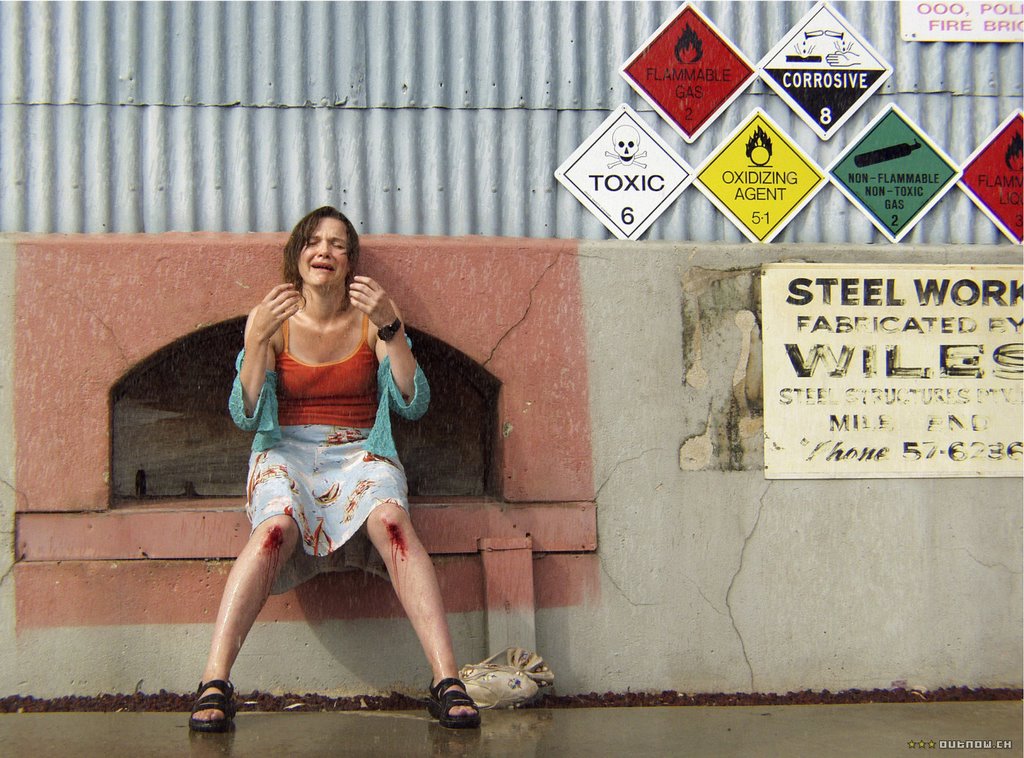
As such, at any given moment and chances, we might be tempted to deviate our attention to the paintings, rather than the story. Yet, Watt superbly crafts her film, in a way that we couldn’t help ourselves feeling the characters’ aching for affection and their unspoken yearning for comfort. In a story consisting of three strong plots, brought together by one trigger of an incident, Watt intertwines her characters with tender treatments that by the time the end credit rolls, we will look at the big screen and thinking, that we see ourselves in them.
That’s simply a result of a good story.
just when we thought that we had to surrender our friends, our lovers, our parents, our brothers, our sisters, being succumbed to a mindless game of twenty-two guys chasing one balls and throw it away.
just when we thought that the loud of cheers and jeers from overcrowded cafes start irking us most.
just when we thought we had it all.
here’s something to consider:
a cab driver did not have any idea how the match of england vs. portugal went on.
in other words, and as proven with a glee on his face, he did not follow that particular football event i didn’t even bother to mention the name!
thank you so much. you made my lonely day and night altogether. thank you.
ps: in case you read this and wondered why i didn’t give you a big tip, well, didn’t you see how the traffic was like?!
Ferzan Ozpetek. The sole name and the mere factor that drew me to watching Sacred Heart, and leaving any expectation or pre-conceived opinion behind.
Well, I was wrong. I couldn’t resist occupying myself with certain hope that Ozpetek will once again embrace gay-themed stories as he did superbly with Facing Windows and Hamam, the former being one of my favorites. Yet, as I patiently waited for a little under two hours and after Barbara Bobulova took her clothes off in a public train station, I knew that I was in for something else.
This time, Ozpetek removes his usual clout: women having trouble accepting the presence of gay characters in their lives. Instead, he crafts a character inside Bobulova who has to walk through an unbalanced bridge of being a good Samaritan and a corporate leader at the top of her game. Irene (played by Bobulova) is best considered as an example of many of us who often question our lives instead of being in contentment with whatever things we already posses. Thus, as briefly glimpsed above about her full-frontal nudity in a public place, our heroine reaches the peak of her emotional troubles by having a larger-than-life outburst. Again, a deviation from the director’s staple of leading ladies who’d rather oppress their conflicted minds, and making the films intriguing to watch.
Wait. By saying that, does it mean the film in spotlight here not as intriguing as the others?
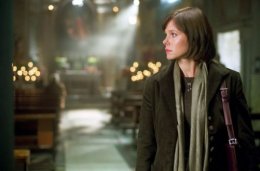
Intriguing, maybe. After all, the theme of doing unconditional good deeds to others while walking a fine line of living a fabulous life is always interesting to watch. Yet, if Ozpetek’s others are still enjoyable to watch despite their heavy-weight drama, this time Ozpetek fails to create the same interest in his audience, particularly the writer here. By the time Irene does her wandering, we hardly care about her motivation, because Ozpetek presents her, or rather, clothing her with only an outer mantle that somehow discourage us to get further peek inside her skin. As such, Bobulova’s terrifying act reminds me of what Christian Bale did in The Machinist: suffering-for-art not supported with a convincing work of art, i.e. good films.
Thus, a token of remembrance in this film would likely to come from the nudity scene of Irene, which by now might be gone off to become overmentioned. But apart from that, there’s nothing much to tell. The same theme worked more effectively in a comedy like Mr. Deeds Goes To Washington apparently.
Upon walking out of the cinema right after the credit ended, I couldn’t help wondering to myself, what caused that hyped controversy and commotion surrounding Paradise Now. Is it the heart-rending storytelling of a suicide bomber, or the lip-lock scene inside the car between one of the bombers and a girl?
I may not be exposed that much to the current upstream in Middle East country, but I couldn’t help getting myself jolted looking at a few good seconds of the kissing scene, with the backdrop of a chaotic country in the middle of war. Of course, to justify a little bit, the girl is a modern girl recently returned to Palestine after completing some studies. In what seemingly a stereotype-yet-still-valid depiction of someone from a developing country going home after spending some time in a more modern and established land, the girl is also shown wearing pants and tight shirt, instead of burkha like her fellow citizen.

The same modern-sentimental point-of-view as reflected in the above paragraph was unconsciously reflecting in my understanding towards the film. Not only applied to the kissing scene, which by now has irked me most as it actually is a very disposable scene, but also the understanding towards the story about the final hours of two suicide bombers. Storytelling wise, it couldn’t be more gripping with some hilarious scenes peppered evenly throughout the film. In particular, the scene where a suicide bomber is making a heartfelt goodbye speech to his mother before he goes on a duty, only to find that his speech is not recorded yet because the camera operator forgets to load the camera with a film.
Yes, folks. Sensing a deviation of talking about the heavy-weight theme of the story, and focusing to the light-scenes-that-matter-most is what I’ve always been aiming at. Again, I’m not in any fair position to discuss the suicide bombing, as I believe that it’d be best left to any political analyst around. What I’d like to believe most is the ability of the film to crack me up in a wide smile once in a while, soon to be replaced with gripping scenes of cat-and-mouse game between the bombers and terrorist groups marching ferociously in the film, and that’s more than enough to keep me glued to my seat.
That concludes that Paradise Now has given me a sheer joy of pure cinematic entertainment.
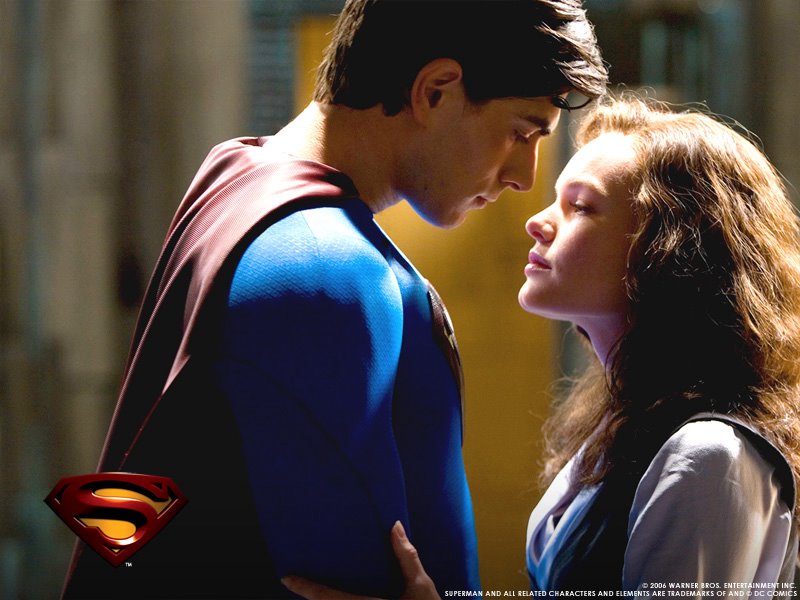
Like any thing we have to make in our lifetime, there’s no formula for success. There’s no pattern to guide us how to make an achievement of, aptly put, being successful. However, one thing that stands out above the rest is the passion.
The passion to treat the subject with a great tender, like carrying your own baby, and develop it well, so that he has a character evolution that also transforms the people around him. They will have their own distinctive characters that make them appear full of flesh, and we are keenly awaiting their appearance every time.
The passion to believe that what you want to achieve is a success, in every aspect, in every target market. While it often deemed almost impossible to bridge a critical and commercial success, remember that miracle does happen. You know you’re taking care of a big name, but remember, by now the big name has grown. You’ll only need to grow it a little higher.
The passion to have a little faith on faces you’ve doubts of pulling the charactes through, yet, once they get a deft direction, they will work wonderfully. That even applies to the villains.
The passion that the legacy lives on.
The passion is what makes Superman Returns.
And he will.
What drives you most?
What excites you?
What leads you?
What thrills you?
What have you done to achieve those?
What?
Nothing?
Or a little something?
What if you fail?
What if you succeed?
What if you finally quit?
What if you decide to march on?
What happened?
Who knows?
Where else can you go to make your passion your profession, at last? At the very last?
But, what if you realize that you are best left out being appreciators rather than the main players in that field of your interest?
What if you realize that if you don’t have the cut there?
The persistence?
The resistance?
What if your admiration has to stand quite afar from the spotlight?
What if you’ve been right all along?
What if your sacrifice fails to bloom?
Mark that word. Sacrifice.
There are many good things to talk about The Dorm. Apart from the hardly arguable fact that they make the film compelling to watch, they lead to one obvious matter: the film stays away from the horror genre, and plunges to a terrifyingly good dramatic works.
Gone are the mindless, often numbing, creature-filled horror Thai films, which actually revive the film industry in the country to be one of the most sought after in the world. Yet, the director Songyos Sugmakanan, who was also on the board with My Girl a few years back, chooses to follow the path of his fellow comrades whose penchant over crafting a masterful storytelling win over predictable shocking values often way too much to see on any horror films.
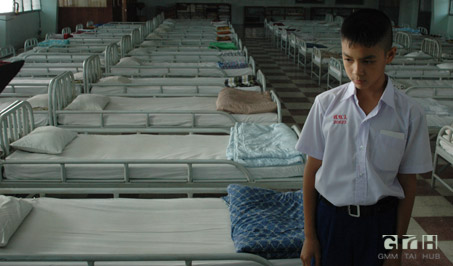
Instead, Sugmakanan cleverly presents the film more as a father-and-son story, a theme often reliable to provoke thoughtful minds, like The Return. Indeed, it is interesting how the overall plot is triggered from a coming-of-age endurance the main character has to go through while he is facing obstacles from somewhat a full-of-misunderstanding communication between him and his father. And once we are settled in this dramatic territory, we will forge the temptation to get silly scared over the creepy background, which in many surprising ways, never overwhelms the film’s tender, touching story.
Alas, if we think that Thai film industry is at the brink of overexposed tiresome, perhaps this film in spotlight is a rejuvenating, and outstanding, work the industry should be proud of.
Let’s just say we make love.
Once, twice, thrice a day.
Even more, even less.
But do they mean anything to you?
The stroke of whoever fingers on the back
The sweet tender words whispered through our necks
The gentle tap on whoever shoulder
Let’s just say I have enough of that
Yet I yearn for more
Let’s just pretend we never endure deeper than that
Yet we constantly, religiously, and tremenduously embark on it all the time
Maybe you never get to experience our sensuous sessions
You go for quickies, I go for embraces
But today
I think I tickled your senses.
PS: what would it be if I kissed you back at that time? Will it be a greater love than ours? Will it be an eternal regret?
Beauty pageant. Colorful furs and wigs. Steroid bodies. Hunky studs. Fashion equips.
Just every common stereotype labelled to the campiness of gay life is mentioned, we’ve got to see all of them in Cut Sleeve Boys, the title itself refers to a slang, sort of, used to describe gay Asian male in UK. Whereas the premise of cultural clash of East vs. West has been brought up to the big screen through a hardship look (Yasmin), or a bone-tickling manner (East is East, Bend it Like Beckham), here the first-time director Ray Yeung chooses to focus instead on the ‘fabulous’ side of gay, leaving the cultural distinction of the characters being both Asian and gays at the door.

Which means, while the film does an almost knock-out premise, it never takes itself seriously. The film opens with the story of Gavin, a closet gay working menial jobs, who encounters death while involving in a slightly unfavorable sexual intercourse with a stranger. From this point on, the story begins, and we are required to determine ourselves how the death makes an impact to Gavin’s two best friends, Mel and Ash. Their lives as two Asian gays revolve around the listed words right below the title above, and more. Yet, they remain within the jovial side of the chosen life, while the enduring part of their cultural lives remains a yearning for us wanting for more.
As such, who can’t resist watching a maniacal ego man is having a silly catfight with a beauty-pageant-obsessed balding guy? Yet, while its fun lasts for a good an hour and a half, one can’t help looking beyond the horizon as often inserted in a few scenes of the main characters making out with their Caucasian partners: that above every campy life, there’s substance to make everything becomes contentment.
 Nauval Yazid & His Words.