RSS

Category Archives: Film

on jiffest.

apparently, quite a number of people asked me over emails and YM about what i should recommend to watch during jiffest.

all i can say is, up to you, since it’s your call. i know it’s not a satisfying answer, but then, i didn’t watch that many films as listed on jiffest’s schedule, but from what i saw, here goes:

2046
any killer combination of christopher doyle’s lush cinematography and WKW’s deft direction in depicting stylish ’60s is always worth watching on a big screen. watch out how zhang ziyi rises above all other regular staples of WKW.

5×2
think of a love story with memento style. of course it’s nothing new, the story of break-up, make-up, infidelity has been told many times, yet what saddens me is, despite the unusual way of telling the story makes the film compelling to watch, the film falls short compared to other more intriguing francois ozon’s works. after his swimming pool, i expect something more, not a somber work like this.

Beautiful Boxer
i’ve been quite familar with the director’s (ekachai uekrongtam) works on theater, particularly autumn tom yam which still gives me a pleasant memory to date. yet, being brought up on stage, it may be difficult for him to translate a supposedly touching screenplay to a silver screen, as what we finally see on the big screen is mere glamorized treatment of a true story.

Buongiorno, Notte
for some, the film might change their perception towards terrorists. for me, it is interesting to see opressed italians featured in a film, as opposed to the miscommon perception of all-italians-carefree. and the heavy atmosphere of cold 70s gives the film a chilling look, that by the end of the film, we will long for more.

Since Otar Left
hold your patience, i know the pace is moderately slow. but one particular scene involving a grandmother searching for her granddaughter in which the camera zooms in very closely (and intimately) to reveal every single line of the grandma’s expression, is worth the admission alone.

Downfall
like it or not, hitler is a human being after all, with all his ups and downs, his stuttered hands, his tender care towards the people and things that he adores, and he is simply a man trying to regain his dignity.

Far Side of the Moon

Image hosted by Photobucket.com

refer to my blog entries on SIFFest earlier this year, the film highlighted the fest’s journey, and it received a warm applause from the typical cold audience here. it didn’t take a genius to find out why, for the genius on this film himself has proved his ability to transform his one-man play into a world of dreams and illusions, while he is trying to cope with the harshness of the real world. oh, he does all that while he juggles playing both main characters, directing, and writing the script!

Kontroll
watch at your own risk! saw the film at BKIFF this year, i was blown away with the film’s fast-paced editing and loud rock music on the background. yet, as i thought it over, the film’s many plotholes are hard to escape from our notion.

Millions
if you miss it this time, then you’ll miss the experience of being transported to the world of child-like innocence that, admit it, has been long gone from our emotional minds. the most touching film of the year, simply said.

The Motorcycle Diaries
i remember watching this film with my friend, zefri, and we ended up praising the film while commenting on one particular scene where the film goes black-and-white, and montages of pictures are shown on the screen. both of us disliked, not to the extent of ‘hate’ though, the scene, yet we couldn’t think of any better ways to resolve the problem. it’s there, we don’t like it, yet it doesn’t disrupt the film in general.

The Return
one of the best foreign language films ever nominated in Academy Awards, the film marvels on its no-holds-barred view on adolescence. the bleak look supports the story well, and the film’s shocking ending is not prolonged to become sappy. in other words: a satisfying experience.

The Saddest Music in The World
if you are into playful, absurd black comedy, then you’re in for a treat. what drew me to the film was seeing isabella rossellini as a legless diva, and seeing how my favorite author, kazuo ishiguro, pens a film and having it translated on the big screen. seems that kazuo was very much in the mood of the unconsoled rather than when we were orphans, thus explains the absurdity. i’ll just put the film as something to watch at your own risk.

The Sea Inside
javier bardem is one reliable actor who dares to venture into many territories of acting skills, and alejandro almenabar is one terrific director whose sensitive penchant over dramatic stories is applaudable. together, they make the sweeping look of the main character’s dream looks breathtakingly gorgeous on the screen, and if you are not moved by this, you may have your heart checked, it may be stopped.

Spring, Summer, Fall, Winter … and Spring Again
i don’t care if you accuse me for spoiling the story, but the title can be taken literally, and at the same time, it also refers to the circle of life on one human being. see? that ain’t much to spoil!
and if you’re already used to watching any kim ki duk’s films, you may understand that not many words are spoken among the characters, and perhaps kim is one of the rare directors who understands the narrative quality of still pictures. thus, we all are in for a treat.

The Weather Underground
best seen by historians, students of political science, and many aspiring protestors, all of whom might be inspired from this oscar-nominated documentary.

Whisky

Image hosted by Photobucket.com

how boredom, oppressed feelings and static routine of life can be hilarious and funny, that’s beyond our common understanding. thus, making the film a pleasant to watch.

Yasmin
i’ve got a sense that the film may provoke a certain reaction (i won’t tell what it is) among many religious-based organizations. but i plea, watch the film with open-mindedness, and do not get over-reacted towards the film’s many counter-attack scenes. that’s all.

there, i’ve said my piece, and i applaud jiffest for having such a fabulous premise to look forward to.

have a film-fest season, everyone!
 
Leave a comment

Posted by on 12/08/2005 in English, Film


And The Band Played On …

it is very predictable indeed to pick up the film on this day.

there was a time when aaron spelling could not be more tuneful in depicting the trashy lives of americans, yet he made a move that put every heads turning to him in suspicious looks when he decided to bring up a story on how aids surfaced to prominence for the first time.

the film is called and the band played on.

it tells a story on the outbreak of aids in late 1970s to early 1980s when everyone was busy pleasing themselves and the police department of the world (aka the usa government on the brink of never ending cold war) was busy spending money for military services. at lease these activities would have gone on forever had thousands of hundreds of victims not died in suffer.

Image hosted by Photobucket.com

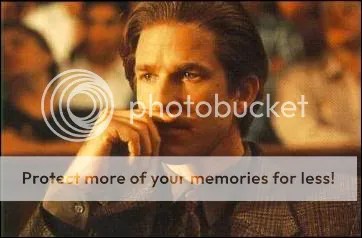
despite boasting the ensemble cast comprised of A-list hollywood stars, led by thoughtful look of matthew modine with strong supports by nuanced performances from richard gere, nathalie baye, ian mc kellen, swoosie kurtz in her utmost non-irritating presence, lily tomlin in her feistiest persona, steve martin in his subtle manner, alan alda in his rare antagonistic turn, etc., the film could not escape from the look of made-for-tv films, and imagining of seeing the film on a big screen would be unthinkable. not to mention some small melodramatic scenes such as modine’s standing in the rain that might look cliche and cheesy.

yet, what made me drawn to the film, long after i took the dvd out of my dvd player, is its sincerity in telling the story as is, without any judgment nor any over-the-top dramatization. the truth could not be stranger than fiction here, where scientific data could give a chilling effect as the story progresses, and the bleak look of the film is maintained well, so as not to give any false hope to its viewers.

Image hosted by Photobucket.com

and the false hope is something that has been alarming.

the film was made in 1993, in which it told the story circa 1981-1985, and seeing the film in the early years of a new century, i could not be more shocked to see its relevance to date. way back more than two decades ago, people reacted to then-unknown virus in some uncivilized way, and sadly, some people prefer to keep the dated thought.

the effort put by dr. francis and the team to make people aware of the deadly illness could not be continued by keeping the narrow-minded perception. that aids spreads in many unthinkable ways is scary, and wearing red ribbons while keeping prejudice mind certainly will not make the illness to be treated better.

Image hosted by Photobucket.com

now, you may think i sound emotional in this entry.
and perhaps this is such a rare time i forgive the film’s face-value quality while digging more on the impact the film has created by linking it to the present happenings within our surroundings.
not to mention that i happen to know some people infected with the virus.

but if i still got scared in getting myself tested for HIV, which eventually i did and the result was negative, isn’t that another indication how we have not been able to cope with the hype, and not even the disease yet, well?

thus, one can’t say happy aids day.

Image hosted by Photobucket.com

 
Leave a comment

Posted by on 12/01/2005 in English, Film


on ffi 2005.

i, nauval, wholeheartedly and dutifully accept the fact that i have not watched the following films shortlisted for official selection to compete in festival film indonesia (ffi) 2205:

gie
brownies
ketika (does watching 1 disc out of 2 discs count?)
virgin

because it requires tremendous efforts to see indonesian films on a big screen here, and financial constraint forbids me to travel back to indonesia on regular basis.

thus, watching 3 films out of the 7 selected ones will be deemed not qualified to put any comments or judgment towards the festival.

i hereby refrain myself from giving any opinion on the result of the festival …

yet let me praise joko anwar for getting his film selected as an opening film for asian festival of first films recently held in singapore. the gesture of appreciation is given to joko for his hilarious debut which shows his penchant towards film, and the film was made with a clear and concise concept on how the film would look like on a big screen. not to mention to generate good, healthy laughter among the film’s intended audience.

for cornelia agatha and sauzan, good luck. may one of you walk with the coveted prize.

for rudi sudjarwo and his ‘tentang dia‘, next time do not ever do deus-ex-machina concept again, ok? ending a story by forcing one of the main characters to disappear in such a banal manner is hardly any logical, at least not to the mind of modern audience. we are convinced that this may work in any novels by graham greene, yet your film does not stand alongside the merits of them.

oh, have i said too much?

for the rest of you, do check the mecca of indonesian film reviews in sinema indonesia. the guys there have surely done a commendable job, and i tip my hat off to all of them.

i wonder if they ever drop by here, though. i doubt so, since we differ greatly in examining films.

the reason why i do not leave any comments on the blog is as simple as:

i don’t have an account in multiply.

 
Leave a comment

Posted by on 11/30/2005 in English, Film


Pride and Prejudice

I assume that those who happen to drop by this blog and reading this have already been familiar with the novel, having read it as a compulsory reading if sometime during their pre-college or college days they choose literature as the subject, or by the very least, be already familiar to the story, thanks to the hype surrounding Colin Firth’s wet suit or Aishwarya Rai’s song-and-dance numbers in polished English. Whatever your resource is, I can assure you that the version of Pride and Prejudice being examined here does not change anything at all from the core of the story, thus leaving me not having to describe anything that happens between Mr. Darcy and Elizabeth Bennett.

In fact, there’s nothing wrong at all with this exquisite film. At the time of rising trend in turning classical literary works into some self-proclaimed modern re-imagining adaptation, often indicated by changing the setting of time and place (remember the less-than-great “Great Expectations”, anyone?), Joe Wright decides to stick to the truest nature of the book by keeping the background of the story intact. Such a relief indeed to see a period drama with girls wearing corsets hidden under layers of their enchanting dress while parading themselves in majestic castles, and not since Merchant-Ivory team that a director can treat a classic work into something precious and beautiful as this.

Image hosted by Photobucket.com

The perseverance to keep the spirit of the book thus leads us to witness a fine acting ensemble, led by Keira Knightley in her spitfire performance as rebellious Elizabeth Bennett, an unlikely heroine at the time of women’s reservation. Keira’s determination indeed works like a magnet that captive audience to long more of her presence, and not even a scene where she fails to lit up the screen with her ethereal beauty alongside her bravura acts. In accordance to the film’s release at the end of the year during Oscar campaign season, I strongly believe she can pull off the same effect like what Winona Ryder did on 1994 with her “Little Women”, i.e. to emerge as an underdog, and slowly build the way up to scoring a nod for Best Actress in a film based on a beloved classic novel.

Her other compatriot is the hilarious Brenda Blethyn playing as her mother, a busy-bee woman whose mind is occupied in finding good men for all of her daughters. She might be over-the-top, yet her antics give the film necessary laughter whenever she appears on the screen. Talk about being an effective scene stealer here.

Image hosted by Photobucket.com

And now comes the part that personally I dislike most: bashing a good film.

So the acting is superb, the screenwriting manages to stay faithful and keep the spirit of the book well, the direction is deft, the score is enticing enough, and what could possibly ruin the whole 135 minute of the film?

Believe it or not, it is the ending.

Here in Singapore, we are very unfortunate to be given with the US version, which contains additional scenes, and I have to warn you that these additional scenes deem unnecessary, and to some extent, these scenes linger on to my mind, way long after I watch this film more than a week ago.

Of course, I respect my readers’ preference not to have any spoilers, yet I do strongly suggest that if you manage to watch the UK version, it is slightly shorter and the scene the director picks to end the film is, indeed, a bang.

Whereas for the US version, what is meant to be sexy on the first place, turns out to become, sadly, an out-of-place laughing stock.

Anyway, I guess this is the first time for me to say:
Leave the theatre before the final scene appears, and you’ve got a beautiful film to treasure.

 
Leave a comment

Posted by on 11/26/2005 in English, Film


Prime

Before we begin, let’s talk about, or rather, let’s walk down the memory lane of good ol’ days. The same activity that I did when I watched the film, and soon enough you will be able to see why.

I remember Uma Thurman on her pre-Kill Bill days.

Image hosted by Photobucket.com

She stormed to cinematic world with her classic, fragile beauty as shown on her luminous face, and at first Hollywood seemed clueless not knowing what to do with her otherworldly grace. Surely “Dangerous Liaisons” showcased her acting, and “Pulp Fiction” cemented her cult status, not to mention scoring an Oscar nod for that, but it was not until “The Truth About Cats and Dogs” she can be at her complete ease with her physical quality and make use of that in such a comical way. As further enhanced in “Beautiful Girls” where she still stands tall among an ensemble of fellow young actors, Uma has come full circle in accepting herself and her beauty, and play along with it nicely to equip her with amicable comic timing in every comedy she has done so far.

I remember Meryl Streep on her days in late ‘80s/early ‘90s.

Image hosted by Photobucket.com

Already touted as a great actress by then, as proved by her 2 Oscars and 6 other nominations as of the year 1990, she surprised filmgoers and critics by taking comic roles successively in “She-Devil”, “Defending Your Life”, and the most hilarious of them all, “Death Becomes Her”. A challenge that she conquered brilliantly, indeed. Who can forget her maniacal expression when her face turned backwards in “Death”? Her sarcasm in “She-Devil” brought down Roseanne’s wits, and she easily matched Albert Brook’s style in “Defending”. Thus, the status of a great living actress is not too much, for she has proved her skill both in dramatic and comic roles equally wonderful.

Now, a film featuring the two actresses baring their souls to the core, when they have to show their range of acting skills, in a comedic film, what can we expect?

As simple as: class-act performances!

Image hosted by Photobucket.com

In Prime, Uma and Meryl bring out their aforementioned comic skills to their scenes together that prove to be nail-biting and riveting. Look out for them having to chew the uncomfortable awkwardness after finding out that as a shrink (Meryl) and her patient (Uma), now they find themselves as supposedly nemesis to each other after the patient dates the shrink’s son (Bryan Greenberg). Worse, eventually the couple falls in love despite their age difference, not to mention having an overprotective mother who insists on the same-religion marriage.

Thankfully, the awaited solution proves to be satisfying, and I have a good suspicion on how the director and the writer, Ben Younger, can go away easily with this. But no matter what it is, the jovial mood he has on making the film is apparent enough, and such a wise decision indeed to have many scenes featuring Uma being goofy and Meryl turning mad filling up the screen together, sparking good and loud laughter.

After all, it is not everyday we get a mother talk about her son’s penis to his date.

 
Leave a comment

Posted by on 11/25/2005 in English, Film


Chicken Little

Oh. My. God.

So we all know that Chicken Little is Disney’s latest bait to test the water on what will happen after Pixar leaves them for good after “Cars” is released next year. A sad move, but such a move is necessary, and you will know why after you finish reading this piece.

Assuming that you watch this film during the holiday season, when you will take your kids or nieces or nephews or basically any people under the age of 12, I plea to you all to pick any other films to watch, because you don’t want to see your kids getting harmed by the film. Why? Because, oh God, do you all really want to know why?

Here’s a spoiler.

The film will be listed in my annual top films of the year as …

THE GAY-EST FILM OF THE YEAR!

Everything in this film screams “Gay” out loud in pride! Do you want some proof?

Let’s start by the commonly perceived Disney’s convention in omitting the mother-character in almost every single (animated) film released by the studio. You’ve got Bambi’s mother killed within the first 40-minute of, well, “Bambi”; and whoever knows about Ariel’s mother? Then of course, Belle has no parents, and Nemo’s mother dies when he is still being an infant. I was convinced that Disney finally getting sober when “The Incredibles” was out, for finally Disney managed to break the boundaries … which sadly, did not last that long.

Image hosted by Photobucket.com

Moving on, having your son imitating Chicken Little singing “I am the Champion” (a narcissist version of “We are the Champion”) under a spotlight made from a torchlight put on his bed will cause him being vain and God only knows what sort of effect will be derived by having the late Freddie Mercury as an idol.

And soon enough, Runt the Litter will be cemented and clamored as a gay icon, thanks to his “Streisand collection” (and his persistence to keep it), sadistically singing Spice Girls’ song during karaoke session, and talk about being a good buddy to a girl in distress over her not being popular and less self-confident about her look? This speaks loud.

Not that I don’t have a good laugh throughout the film, but I could not help pitying Disney over its waning magic in providing the audience with narrative storytelling that compels us to our seat and looking at the big screen with awe. The story that revolves son-father relationship has been told too many times, which could work differently if it is presented in a different angle. Yet, the plain manner certainly did not help elevating the film to be a distinctively feel-good flick, especially knowing that a similar theme has previously been explored in depth in “Finding Nemo”, released in only 2 years ago.

Image hosted by Photobucket.com

Patching the plot holes with mindless pop tunes certainly would not do any good to the film, even worse, making the film becoming the most uninspiring Disney film in years, scoring-wise. Notice how recently Disney’s film seldom made to the Original Score nomination in Academy Awards? That’s another issue altogether, yet I can’t help thinking so after seeing the mess of the film in its musicality.

This concerns me most, especially for parents/uncles/aunts out there, if you happen to see your kids/nieces/nephews belting out pop tunes instead of show tunes, wouldn’t you worry that the girls’ will be popstar-wannabe and the boys’ will be non-culturally polished gays?

Whatever it is, my final say goes to Pixar: Run for your life, the (Disney’s) sky is falling!

 
Leave a comment

Posted by on 11/23/2005 in English, Film


Kiki’s Delivery Service

I remember when I was a kid, I made sure that I got up early in the morning on Sundays, so as not to miss my favorite cartoon series. From Unyil, to Dash Yonkuro, to everlasting Doraemon, and the short-lived Asari-Chan, although this came out on Saturdays during the time when I had just started studying here.
Somehow there was this inexplicable nature of seeing a cartoon on Sunday morning, it could be the feeling of a holiday that results in a jolly feeling during and after watching the cartoons, knowing that my 1-2 hour sitting in front of a television was not a waste, and I found myself recharged with energy to do any activities afterwards.

I could not be more glad to revisit the worth taking experience again earlier this morning, when I decided to watch Kiki’s Delivery Service, one of Hayao Miyazaki’s stellar works that made him a living legend.

Image hosted by Photobucket.com

Such a praise never seems overrated though, for Miyazaki has been known for his heartfelt storyline without being weepy, and Kiki is no exception on this department. But if you look for otherworldly fantasy with larger-than-life characters, you are bound to disappoint.

This is what I was surprised at. Having been familiar with his works such as “Spirited Away” or “Princess Mononoke”, I expected some monsters to eat Kiki alive or turned her parents into pigs. Yet, Kiki’s greatest enemy, if only there’s any literally, is a group of crows who still act and behave like, appropriately, crows themselves. The only exception perhaps Jiji, her talking cat, but then, aren’t all the commonly-perceived witches equipped with one?

There you go, even without defying convention by twisting Kiki into some complicated or complex characterization, we still get hooked following the story of Kiki, a young witch who at the tender age of 13, must start living independently to sharpen her skill as a witch. The journey never fails to amaze us as Kiki, the witch, turns out to be an ordinary girl who starts getting a grip of her life while seeking for her truest identity.

Image hosted by Photobucket.com

Feminists who complain how recent films seem to deter from portraying good female characters might find solace on the film, as such a rarity to find any films, be them animated or not, to have a strong character of woman carry the whole film throughout. It is definitely another Miyazaki’s element which has been persistently reserved in most of his works, and knowing that the film was made in 1989, anti-Hollywood film critics may quick to point out that the film is ahead of its time.

Children will love having Kiki as their sister or friend, or simply daydreaming to be one, to be able flying around with a broom and a talking animal as their faithful companion, thus starting to get the film’s merchandise, and thankfully, it was given a lesser treatment in business-minded Disney, despite handling the film’s international distribution.

Image hosted by Photobucket.com

For me, I simply have a good time watching Kiki’s journey to be able to know what she wants to do with her life, how to live on her own terms, and be responsible for it. Too much? I don’t complain on having my Sunday ruined, right?! 😉

 
Leave a comment

Posted by on 11/20/2005 in English, Film


Love and Death

Watching any Woody Allen’s films set in anywhere but New York, a city filled with its sophisticatedly advanced and highly educated people according to him, is always interesting, in particular to his early works pre-Annie Hall. The much younger Woody Allen had already known by then to where he should be headed with his wits and penchants for twisted philosophical views, and satisfying audience based on box-office takings certainly has never been his main priority.

An auteur, they say. The directors who insist on translating their visions to the big screen as concise as possible, thus high risks are nothing new on their menu. They may face constant downhill or uphill, and this should not bother them, for they will keep on making films despite critics’ wariness, for these madly creative conductors hang on to their beliefs that when they die, both existing and newly found fans will dig up their works, all of them, calling their less-successful works as “underrated”, “hidden gem”, “underappreciated”, etc.

Perhaps then, Woody Allen is one of the few remaining auteurs still alive and kicking his creative gears in producing films every one or two years. So much anticipation is reserved for his upcoming “Match Point”, an oasis of his recent string flops, yet his failures are things I find them hard to decipher, especially after seeing his earlier works, including Love and Death.

Image hosted by Photobucket.com

You don’t have to wait until the end credit rolls to find the film as ‘a Woody Allen film’. His admiration towards Ingmar Bergman is obvious enough on the presence of Death, a direct in-joke of the same character in the higher maestro’s classic “The Seventh Seal”, the split faces of Diane Keaton and the actress playing Ivan’s wife, and to those who nose on trivia, the mention of “The Magic Flute” as the greatest opera Mozart ever made during a pre-opera show scene also works double as it can be referred to other Bergman’s earlier work.

More importantly, what constitutes as a Woody Allen film is the director’s wits, a result of years doing stand-up comedy. Intelligent without being pretentious, Allen’s jokes are often punching you hard in minds, and the film’s laugh-out-loud-by-minute proves his excellence in delivering not just a comedy, but a mind-blowing film filled with originality in turning history to a hilarious result unthinkable at the time. Of course, you may think twice on being a pacifist during war season then.

Woody Allen’s deft comic timing is equaled by his muse of 1970s, Diane Keaton, who started developing her own comical sense, and she carries her deadpanned role easily, and watching her devilishly naïve in doing her wrongdoings gives the film a sense of pleasure to watch. After all, it is unlikely to find any other actresses can easily utter philosophical quotes in such a zany act to remain thoughtful.

And being one of great directors who has been widely known to bring out the best from his actors certainly will only cement the towering Woody Allen’s legendary reputation.

 
Leave a comment

Posted by on 11/18/2005 in English, Film


Me and You and Everyone We Know

Why is it that certain films prompt you to sit, watch, think, and cry while watching them closely?
Because of its sappy characters, overblown plot or mediocre musical scores that go overly used in the background of the film?

Sometimes, a film gets us big time because of its compelling storytelling that rings true to our basic necessity as a human being. The film on the spotlight here, Me and You and Everyone We Know, teaches us, or rather, reminds me on the necessity to communicate and interact with other people in this complicated world where self-recognition is on top of everyone’s priority list.

Image hosted by Photobucket.com

Ever since the film starts with the images of neatly arranged pictures on the wall of our main character, Christine, and she starts imagining things by making up dialogues of what the people in the pictures might say to each other, we are hooked with the situation she traps herself in. Loneliness that turns herself longing for companion, that also turns herself to sacrifice her artistic ambition to become a cab-driver for elder people, who give her ears to share her thoughts, who, in some twisted fate, introduce her to people she will embark on some relationships … There you go, you have an idea why the film is aptly given such a title that seems to be a tagline for overrated Friendster.

Yet, perhaps it is not too much to derive a hypothesis that the film works like the website where everyone is connected to another, and at some points in their life, they are communicating to each other. Film-wise, the idea is far from original, perhaps one may quick to note Jafar Panahi’s The Circle as one of fine examples.

What makes Miranda July’s stunning debut poignant lies on the film’s acute and accurate depiction on people’s primary need on not being alone, knowing that their existence recognized in one way or another, be it through a bitter divorce process, being an object of sexual desires of a pervert, or doing sexual chats with an underage kid, unknowingly. July excels in her approach that reels on tenderness of human beings, and treating them equally as fellow inhabitants of one deserted city, without putting any judgment on them. Not even while she makes fun of artsy people with their pretentiousness, the joke is delivered subtly, as if July treats the film carefully like a baby on her early stage.

Image hosted by Photobucket.com

Indeed, the affectionate feeling is felt as her labor of love, and a work delivered with a lot of hearts results in a film that screams out words like “original”, “beautiful”, or “a breakout”, or “simply a gem”.

She deserves all the accolades, and I deserve the film to be inhibited within myself, just like one of the main characters, Richard, says to Christine while she complains about how painful it is everytime she tries new shoes, and Richard consoles her without even touching her feet, yet carefully examining the pain, looking at her the way a shoe-store keeper treats a customer, and innocently tells her:

“You think you deserve the pain, but you don’t”.

Image hosted by Photobucket.com

My favorite film of the year.

 
Leave a comment

Posted by on 11/15/2005 in English, Film


Ungu Violet

Knowing that the film is submitted to some international film festivals, I joked with my friend about how they might translate the film into English. Will it be “Purple Violet” or perhaps “Violet, Violet”? Such a redundancy, in fact, since there’s no character by the name of Violet in the film, unlike “Eliana, Eliana”, aptly titled as the story revolves around the girl by the name of Eliana.

Considering the fact that I’ve been living away from Indonesia most of the time, I have to settle seeing the film as distributed by a Malaysian film distributor, and that means I have to compromise my patience not to bitch about the “suitable” Malay subtitle shown throughout the film. By any means, English subtitle is a must for a film like this to avoid any confusion in matching the dialogues and the written words, and I believe any Malaysian films imported to Indonesia (like there’s any, though), should be having English subtitle as well, so as to not getting bitched about by audience well-conversed in the similar two languages.

Now, you might be wondering that this is not my habit of spending two paragraphs talking about anything but the film itself. Not that the film itself is a trash material. In fact, the film has some standout scenes that work well to present good quality on being a melodrama movie. Particularly, those scenes belong to most of the time Dian Sastro and Rima Melati act together. The former girl has injected much of herself in the character, an assumption made from the fact that Dian is indeed a model, and one of the brands in which she is the spokesperson of is featured in the dialogues, thus seeing her comfortably bringing out her character is a pleasant to watch. The latter actress is a senior actress who has mastered her dramatic skill never deters along with the passage of time, and on her final scene with Dian where they talk over the phone yet they do not reveal many words, is indeed heartbreaking. Rima successfully shows us a master class of conveying a convincing act without uttering, or worse, screaming words, but rather, inhibit them, and projecting the intended meaning to the outer facial expression.

Image hosted by Photobucket.com

Sadly, the same cannot be said to the leading actor, Rizky Hanggono. In his leading role debut here along with two more established performers, Rizky seems trying hard to catch up while maintaining his supposedly cool looks, which unfortunately translates as blank, incompetent looks on the screen. If he thinks that his words help him carrying the role, he could not be more wrong, as his words were kept to minimum in this visually generous (yet less gorgeous) film.

Emphasizing more on Rizky, I partly blame his failure to the director, Rako Prijanto (am I having a Freudian slip to type wrongly, that the directorial credit belongs to Rudi Sudjarwo? It feels like Rudi’s film all over the place, though).
Rako should have known the limitations on Rizky’s ability in donning his lack of dramatic acting skills, and the fact that Rizky was given lesser dialogues, quantity and quality wise, is perfectly acceptable. Yet, during Rizky’s scene with blink-and-you-miss presence of the always reliable Niniek L. Karim, when the camera zooms in on his non-expressive look and forcing him to shift within seconds to project extremely different feelings from laughing silly to drastically becomes sobbing uncontrollably, Rizky simply fails to nail it down. The effect was laughable throughout, and worse when the scene was shown for more than three seconds, immediately registering to this writer’s memory as the one scene that brings the whole movie down.

Image hosted by Photobucket.com

Not even the lush cinematography seems to be rip-offs from any Christopher Doyle’s shots found in any Wong Kar Wai’s films matter to me most. Not even I mind lack of variety on background music scores created by Piyu from Padi. Not even I bother about the repetitive deus-ex-machina concept overtly used in most dramatic Indonesian films and TV series to bring the story to the end.

Not everyone can do what Diane Lane does in Unfaithful or Juliet Stevenson in Truly, Madly, Deeply.

 
Leave a comment

Posted by on 11/08/2005 in English, Film


Waking Ned Devine

There are times when we wish to see a film in cinemas instead of getting even with small size of our television screen.

We may quick to list these films worth going to cinemas for, which obviously will be filled mostly with big-blockbuster films, those with overused CGI effects, or panoramic cinematography, or crisp clear of clinging swords in any martial arts flicks.
However, I heartily propose a film entitled Waking Ned Devine as a film worth every single of our hard-earned dough.

Why do I bother bringing in the film about a lottery winner who dies before collecting his winning, and turning his neighbors in plotting a scheme to outlive the money? Spare for a few minutes of gorgeous view of beaches in (supposedly) Ireland that makes us wish to live there, for most of its 90-minute duration we only see British and Irish’s finest aged thespians, without any girls in scantily clad bikini running around.
But more than that, we will see at least two old folks don their birthday suit, while riding on a motorbike nevertheless.

Image hosted by Photobucket.com

That only counts for a few scenes from many other hilarious ones you find yourselves laughing out loud throughout this heartwarming flick.

Now imagine, if you are laughing together inside a darkened hall with strangers whom you have nothing in common except the share of laughter towards the same object seen at the same time, and leaving the cinema feeling good, knowing the last one and half hour is spent jolly well.

Image hosted by Photobucket.com

Movie magic certainly does come very rarely, only in a film like this.

 
Leave a comment

Posted by on 10/28/2005 in English, Film


Shadowlands.

Dear readers,

By now you have noticed how my writings on film appreciation have differed to some other kind which I myself do not possess any control on the change. Of course the notification only applies if you are that faithful in reading this blog consistently, in which the idea itself frightens me out. If you are on the opposite side, I extend my gratitude and welcome you, indeed.

The change itself pretty much is easily identified on how I have recently often dwelled on absorbing the whole impact of the film. In other words, it is what I feel afterwards, what my heart says after the credit title finishes rolling, and I can sit in front of this monitor to pour out every single initial sensory reaction to the films I have just seen.

By any means, this kind of writing would usually put aside technical matters or basically the elements that make the film works, for example, some technical flaws on cinematography, or inadequate music scores, or the one that I talk about most is actors’ performances. Not that I see myself capable in delivering in-depth discussion about that, yet I always find the tryout in touching those mentioned factors appealing, and to some extent, intriguing, as well as challenging my mind to think those through.

However, tonight I have decided to return to the so-called root, as one film has awakened, or rather tickled my curiosity in examining the ‘outer’ look seen on a screen. The film is Shadowlands.

Image hosted by Photobucket.com

In a nutshell, the film tells the story of that famous author, C.S. Lewis, and his marriage to an American woman, a poet, named Joy Gresham. The characters did exist in real life before, therefore it is aptly called that the film is based on a true story. This will lead to general understanding among smart audience that no matter how the film is mirrored after events ever existed before, certain aspects of exaggeration in the name of dramatic purpose is needed to make a film worth watching. Therefore, is it necessary to put the words “This is a true story” on the very first scene of the film?

Having already seen that on a screen, as audience we are led to believe by the director (none other than Sir Richard Attenborough of Gandhi fame) that he guarantees what we will see for the next 127 minutes are exactly what the couple did on their lifetime or the ways they behaved towards each other is guaranteed real to a maximum effect.

The result could not be more disappointing than seeing the screenplay full of worth-quoting wisdoms has become something of half-baked done. Surely the main actors, Anthony Hopkins and Debra Winger, have delivered their excellence, yet the problem of their convincing portrayal of ill-fated couple lies on our perceptive towards them. In other words, their convincing portrayal fails to convince us in thorough comprehension of their love story.

In particular, Winger on her Oscar-nominated role here was given a character with many possible deeper exploration in seeing her gracious falling from a strong-willed, independent woman, to become a woman who has to compromise her unfortunate condition while doing her best to provide affection to her partner in life. Yet, the falling on her character is badly translated as the falling of her screen presence, in which after a good knockout for the first hour in the film as a leading role, she is reduced to become some supporting player. Worse, I begin to think that the last hour of the film, we see Winger’s role has become a damsel in distress, only to be puffed with lavish look of 1950s gorgeous costume and panoramic view.
Luckily, being a consummate thespian on her own, Winger carried her duty amazingly well, although it is a pity to see the butchering.

Hopkins himself might not see his presence reduced to a mere filler of the screen unlike his compatriot. How can it be when his face occupied most of the film? Yet, his inhibition of character leaves us bedazzled in wonder and confusion, as often we find the character’s change is something forced to happen. As a famous writer himself, C.S. Lewis might visit his sentimental feeling in order to emphatize with his own suffering, yet as a noble man with dignity, a weeping scene that lasts for more than ten seconds would only make audience thinking that the old man is a meek, weepy senior citizens who should be back in his emotional reclusion. Talk about the backlash of intended depiction.

Dear readers,

I sincerely hope by now you do realize that whenever a resourceful literary works is adapted into a big or small screen, it is no easy feat to capture the truest essence of the works being adapted. Worth-quoting wisdoms, mottos, or any symbolic words are not able to hold on their own unless they are transformed as a coherent screenplay which allows us, the audience, to see the development of characters convincingly, thus we are convinced that whatever we witness in the screen is a journey worth taken, and remembered.

 
Leave a comment

Posted by on 10/19/2005 in English, Film


Hedwig and the Angry Inch.

some films catch you off guard, where you are taken to completely a new world while you are still maintaining a good contact with the film you are watching. this does not mean your concentration deters away from the film, but rather, the film strikes you hard and you can’t help wandering for a good minute or two, because unexpectedly, you feel the film completely with all your senses.

and hedwig transports me to the heartfelt experience.

Image hosted by Photobucket.com

not being merely contented with my own emotional involvement, the jolly feeling also comes in noticing how this film has set a certain barrier on making a good rock-opera film.
there’s a struggling and to some extent painful journey the main character goes through in his life before coming to his own terms as a singer, a musician, or greater, an artist. this journey then is translated on the words and tunes, to be sung out, played, or greater, appreciated. perhaps the latter might come later towards the end of this artist’s life, because a biopic does not befriend young rising stars after all.

but the main thing a rock-opera film should possess apart from continuous rock songs filling in throughout the scenes is the honesty, and consistency.

alright, that’s already two elements, but they can’t be more inseparable from one another.

hedwig excels in frankly telling us the journey of his life through the lyrics in all the original songs being sung out in the film, making us feeling like witnessing directly his presence in front of our eyes. if such an honesty comes out with catchy tunes enable us to sing along, that’s purely a bonus in store. yet, a greater effect of these unpretentiousness results in a certain constancy maintaining the rock-and-roll atmosphere, as perhaps initially intended by the filmmakers themselves. never a scene slips out of tunes leaving us unhooked, and never a moment shies away out of focus from putting the spotlight on hedwig and his angry inch.

Image hosted by Photobucket.com

to have a film that is brutally honest and lyrical at the same time, one can only be thankful and be more than ready to have its own heart wrenched over this meaningful film.

 
Leave a comment

Posted by on 10/17/2005 in English, Film


American Splendor.

pardon me for being terribly late in encountering this film, but i’ve already got enough punishment on my own, for disbelieving that it’d take me this long to witness and indulge looking at a comic literally translated on a big screen, it was initially transferred to the medium although i only managed to grab its dvd, to an extremely pleasant result.

“one visually arresting film”, and such a compliment does justice to describe a story of harvey pekar and his life from zero to become a hero while maintaining his zero-support job. it is not everyday we get to see a famous comic writer who keeps his daily job as a file clerk, but that’s the whole point of his life as he said, “you’ve got to keep on working and something might bound at the end.”

now, if you feel that my penchant towards this film is due to the identification of myself towards the character, i can’t agree more that i have certain weakness towards films portraying born-loser characters who take a great deal amount in his life before achieving anything he desires in life. and if you are that quick to notice that these kind of characters are often portrayed by paul giamatti (who knocks me off my feet for his showcase of terrifying acting skill here) as what he does in “sideways”, well, pretty much he’s got a perfect figure for that.

Image hosted by Photobucket.com

but the point does not lie on merely having these often-picked-on characters on screen. what makes “american splendor”, be it as comics, film, and play at a mediocre result intriguing should be credited to its daring ability to present the real life truthfully, and nothing can be more appealing to our emotion than things that we encounter in daily life. surely it gets dramatized as chances are you won’t have haunting jazz scores while we see a doctor or being hospitalized to get a treatment, yet above these background, we get to witness how our social life starts getting diminished when we get older, or how scary it is to be lonely whenever our loved ones go away. as blatant and harsh things could be in real life, harvey pekar demonstrates an impossible feat: to be true to one’s own self at times when compromising fame is much preferred.

how shari springer berman and robert pulcini captures the essence of the compelling point above while maintaining the comical spirit of harvey’s original works is purely a film magic.

how paul giamatti and hope davis give a cringe on my skin over their nail-biting portrayals as harvey and joyce brabner show us their faith in these real-life characters, thay the two actors do not only imitate, that they inject their own skillfuly crafted acting to inherit the characters inside out.

Image hosted by Photobucket.com

how i love the film is obvious.

 
Leave a comment

Posted by on 10/12/2005 in English, Film


Tim Burton’s Corpse Bride

Tim Burton does musical! And he does it on an animation film!

I can’t help scratching my head and gushing shyly, and enjoying the rollicking fun of looking at semi-gothic characters parading themselves in a musical number from Danny Elfman that seem to serve as sort-of tribute to old-school musical genre. At least, some scores evoke such a thought if you often see musical films of MGM era. And the blast of these tunes perfectly enhance the atmosphere of the world that can only happen in Tim Burton’s own fantasy world.

Image hosted by Photobucket.com

Imagine a world of living full of gloomy looking people and London turns itself to be a gray city, looking dull and boring. On the other hand at the same time, the underground world way below the graveyards are full of weird looking characters, often not in complete set of body parts, yet they look vibrant and much more alive than the living, as they are presented in bright, dazzling colors. Not to mention that these puppets dance more than their counterparts.

Such a scene might recall for Burton’s previous outing in The Nightmare Before Christmas, and Edward Scissorhands. Yet, what might seem as a totally naïve and innocent Burton on this two works do not show on Corpse Bride, as the latter gives us a much more mature storyline which might be confusing for children who get a chance to see the film, considering its PG rating. I would put Corpse Bride here as part of a testament on how Burton has quite tamed himself recently, with the works like the heartwarming Big Fish, the family-friendly Charlie and Chocolate Factory, and now putting an ensemble of string puppets in a fairy tale that dwells on adult relationship, Burton has tamed himself in maturity that simply swells.

Image hosted by Photobucket.com

Now, apart from the destined Best Animated Feature clout at the next year’s Academy Awards, shall it go for a higher cast? It deserves so.

 
Leave a comment

Posted by on 10/11/2005 in English, Film